What if a community member could report an FGM risk in real time, allowing activists, anti-FGM committees, and police officers to intervene before a girl is cut?
That is the thinking behind AI to Catch a Cutter, a new digital reporting and early-warning platform being developed by FrontlineEndingFGM Kenya and Global Media Campaign to End FGM to strengthen community protection systems and help prevent FGM before it happens.
The platform is built on a simple lesson that has emerged time and again from frontline efforts to end FGM: early information saves girls.
For years, frontline activists, anti-FGM committees, teachers, healthcare workers, chiefs, and police officers have relied on community intelligence to identify girls at risk and intervene before cutting takes place. The challenge has never been a lack of commitment. The challenge has been ensuring that critical information reaches the right people quickly enough to act.
AI to Catch a Cutter aims to change that.
From the Whistleblowers Map to Real-Time Protection
The platform builds on lessons learned from the Whistleblowers Map, developed by FrontlineEndingFGM in 2023.
The original initiative sought to map and visualise reports received from whistleblowers across FGM hotspot regions. By geographically tracking information, activists were able to identify patterns, highlight areas of concern, and support more targeted interventions.
The project demonstrated the value of digital tools in strengthening community-led protection systems. It also revealed the need for a more integrated, real-time reporting platform capable of connecting communities directly with those responsible for protecting girls.
AI to Catch a Cutter is the next step in that evolution.
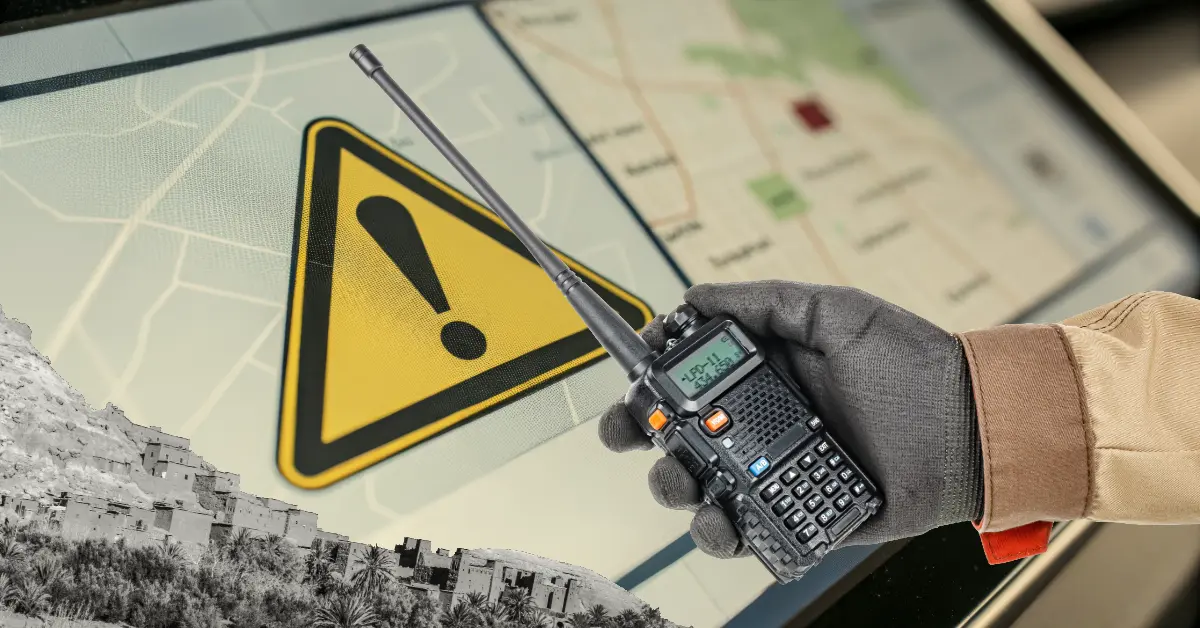
The platform will enable community members, teachers, healthcare workers, youth leaders, anti-FGM committees, and frontline activists to report cutting risks and emerging threats in real time. Reports will be mapped geographically, helping identify emerging hotspots, monitor the movement of known cutters, and support rapid interventions before girls are harmed.
Rather than replacing community action, the platform is designed to strengthen it.
Proven Results Through Community Action
The need for faster and more coordinated responses has become increasingly clear through FrontlineEndingFGM’s work across Kenya.
The impact of community action is already evident.
During the November–December 2025 programme period, awareness campaigns reached more than 30,000 people through community dialogues, radio programmes, school activities, and other outreach initiatives.
Working closely with law enforcement, communities helped protect more than 20 girls identified as being at immediate risk of FGM, contributed to the arrest of perpetrators, and strengthened local protection networks through the establishment of new village anti-FGM committees.
These achievements build on FrontlineEndingFGM’s proven approach.
During the 2022–2023 Christmas cutting season, activists, police officers, and local authorities worked together to protect 1,611 girls across Kenya and contributed to the arrest of 73 alleged cutters.
The lesson was clear: when communities, activists, and police work together — and when information arrives in time — girls can be protected before harm occurs.
Why Police Believe Early Information Saves Girls
From a law enforcement perspective, timely information remains one of the most important tools for preventing FGM.
David Maina, Police Constable and Gender Desk Officer in Isiolo County, says the difference between success and failure often comes down to timing.
He explained that challenges become even greater when cases are reported from remote villages where response times can already be stretched due to limited resources.
Maina also highlighted anonymous reporting as a key enabler of community participation.
“Anonymous reporting through platforms like USSD or online portals would make a big difference. People can share information without fear of being identified, which means we receive more timely and accurate reports.”
According to Maina, systems that improve reporting not only increase the amount of information received, but also help police respond faster and more strategically, increasing the likelihood of protecting girls before harm occurs.
James Njuguna, Assistant County Commissioner in Kapenguria, West Pokot County and a long-time anti-FGM advocate, agrees.
He explained that precise location information helps officers deploy teams quickly and directly to the households or villages where girls may be at risk.
“When we receive precise location details, it becomes much easier to deploy teams quickly and directly to the exact household or village concerned. This reduces response time and ensures that we are not wasting critical minutes trying to locate a girl who may already be in danger.”
For Njuguna, every minute matters.
Training Police to Respond Faster
Technology alone cannot protect girls.The success of any reporting system depends on what happens after a report is made.
As part of the rollout of AI to Catch a Cutter, police officers, local administrators, and other frontline responders will receive specialised training on how to use information generated by the platform, coordinate with anti-FGM committees, and respond more effectively to reports of girls at risk.
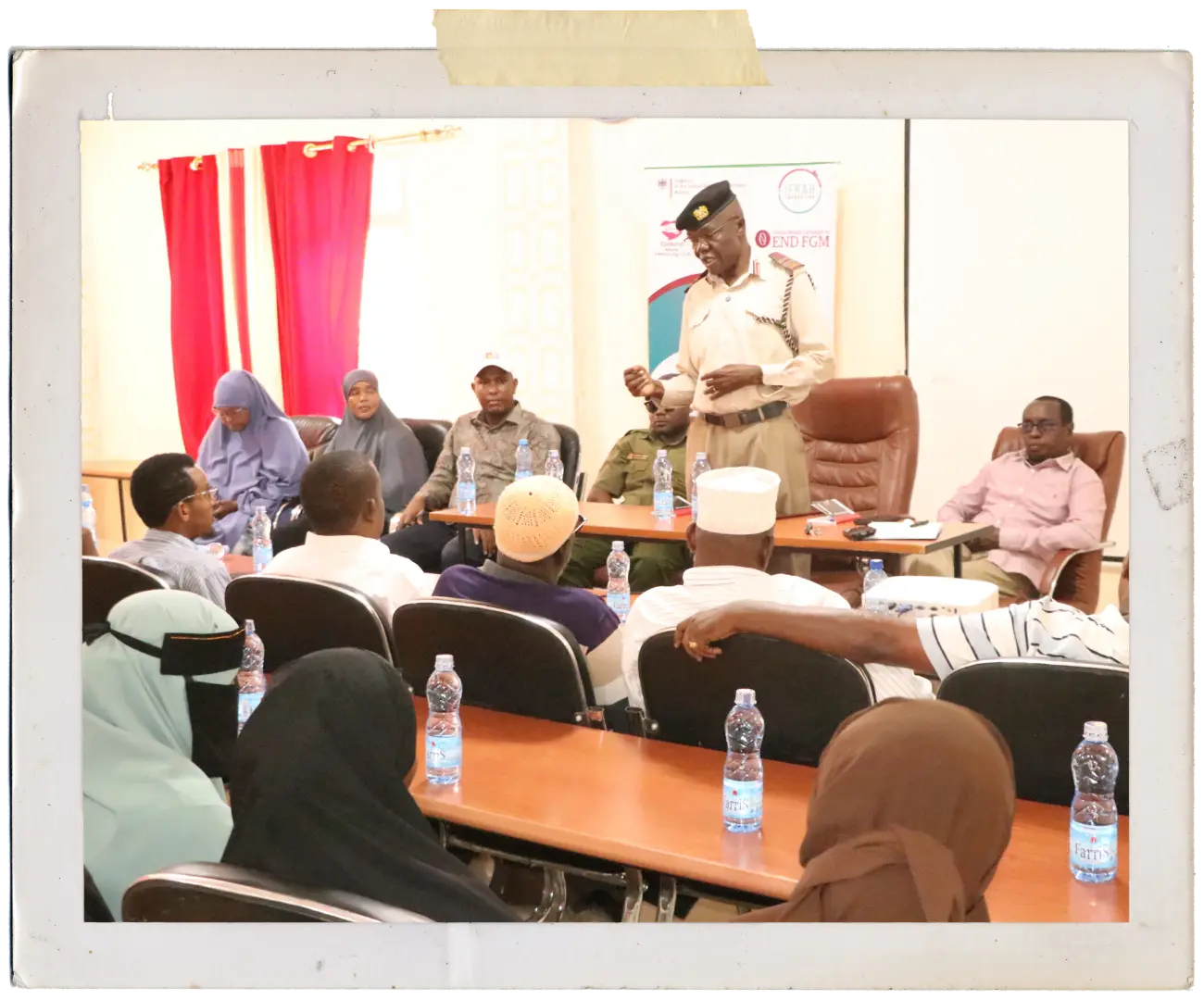
The training will focus on strengthening collaboration between communities and law enforcement, improving response times, and ensuring that reports lead to action.
By combining digital tools with practical training, the initiative aims to create a stronger and more coordinated protection system for girls.
Communities and Police: A Partnership Beyond 16 Days
The 16 Days of Activism may end on 10 December, but the work of protecting girls continues throughout the year.
Across communities such as Garbatulla, Lomut, Sigor, Marembo, and Kathwana, one lesson has become increasingly clear: no single group can end FGM alone.
Police officers, chiefs, elders, survivors, youth champions, women’s groups, civil society organisations, anti-FGM committees, and grassroots activists all have a role to play.
Increasingly, anti-FGM committees are becoming the vital link between communities and law enforcement, helping identify risks early, coordinate responses, and build the trust needed for people to speak up.
When communities trust that action will follow, reporting increases and harmful practices become easier to challenge.
Building a Faster Response System
The lessons from recent years are clear. Building trust between communities and law enforcement remains one of the most effective tools available for preventing FGM.
The evidence speaks for itself. From the protection of 1,611 girls during the 2022–2023 cutting season to the community-led interventions delivered during the 2025 programme period, the strongest results have come when communities and authorities work together before cutting takes place.
Over the coming year, FrontlineEndingFGM will continue strengthening anti-FGM committees, expanding Born Perfect Caravans, improving rescue pathways, and deepening partnerships with police and local administrators.
Alongside this work, AI to Catch a Cutter will be piloted and refined, creating faster, more accountable systems for identifying girls at risk and coordinating responses across communities.
Technology alone will not end FGM. Communities end FGM.
But when communities are equipped with better reporting systems, stronger partnerships, trained police officers, and timely information, they are far better placed to protect girls before harm occurs.
That is the vision behind AI to Catch a Cutter.
Every girl deserves to grow up free from violence, with dignity, and knowing she was born perfect.