The fight to end FGM is often discussed through laws, policies, and awareness campaigns. Yet for frontline organisations working in remote and high-risk communities, one major challenge remains: access to timely information and coordinated support systems that can help protect girls before cutting takes place.
To address this gap, the Global Media Campaign and Frontline Ending FGM developed innovative digital tools designed to strengthen frontline protection efforts and improve coordination between activists, communities, and support services. At the heart of this work are two connected platforms: the Digital Reporting and Mapping Platform, and the Digital Directory of Anti-FGM Services and Organisations.
The Digital Reporting and Mapping Platform was created to help community organisations and frontline responders report incidents, identify hotspots, and respond more quickly during high-risk cutting seasons. For years, many organisations relied on fragmented reporting systems, paper records, and delayed communication, making it difficult to intervene rapidly when girls were at risk.
The platform changes this by allowing trained community actors and organisations to securely share information in real time. This helps frontline groups identify patterns, coordinate rescue responses, and mobilise local authorities and protection services more effectively. Rather than working in isolation, organisations can now contribute to a centralised system that strengthens collaboration and early warning efforts.
The impact of the platform became especially clear during its 2022 pilot in Kuria, Kenya, one of the country’s highest-prevalence regions for FGM. During the school holiday cutting season, the platform played a critical role in helping frontline organisations, activists, chiefs, and rescue centres coordinate interventions and identify girls at immediate risk. Through improved reporting and rapid response coordination, the pilot contributed to the protection of more than 1,600 girls from undergoing FGM.
The Kuria pilot demonstrated how digital innovation can strengthen community-led protection systems. Alerts could be escalated faster, hotspots identified earlier, and frontline actors connected more efficiently than through traditional reporting methods alone. It showed that when local organisations are equipped with the right tools, they are better able to act quickly and prevent harm before it happens.
Please accept YouTube cookies to play this video.
If you accept this notice, the page will refresh.
Alongside the reporting platform, the Digital Directory was developed to address another major challenge: connecting survivors and at-risk girls with trusted support services. Across many communities, survivors often struggle to identify where they can access legal aid, rescue services, psychosocial support, medical care, or safe shelters. Even frontline activists may not always know which nearby organisations can provide specialised support.
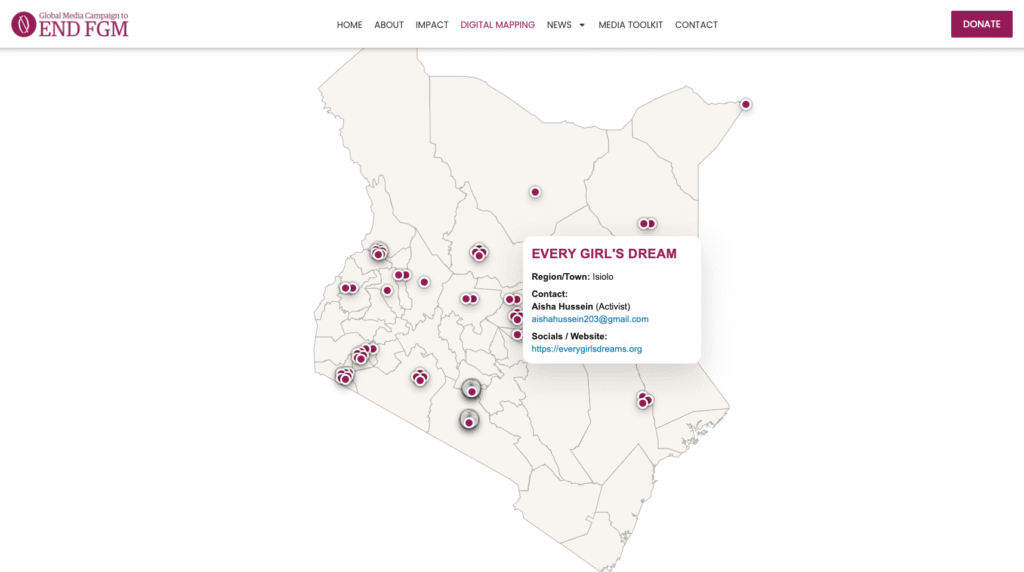
The Digital Directory helps close this gap by creating an accessible network of anti-FGM organisations and service providers. The platform strengthens referral pathways, improves collaboration between organisations, and ensures that grassroots groups are visible and connected within the wider protection ecosystem.
Importantly, these tools were designed with frontline organisations and communities, not simply for them. Built through years of experience working alongside activists and survivors, the platforms are intended to strengthen grassroots leadership rather than replace it.
Digital tools alone will not end FGM. But combined with survivor advocacy, community leadership, education, and strong partnerships, they can become powerful instruments for faster action, stronger coordination, and lasting protection for girls at risk.