Frontline women are leading campaigns that are rapidly shifting attitudes to Female Genital Mutilation at community level – with an average of 79% of people who engage in the flagship approach saying it changed their minds about FGM. Across Guinea Bissau, Liberia, Nigeria, Mali, and Kenya, the Global Media Campaign to End FGM has carried out in-depth impact studies to measure what works to end FGM. After 10 years of measuring behaviour change and scalability of locally-led campaigns, we now know what works: the Born Perfect Campaign, a multi-layered frontline model tested across multiple countries.
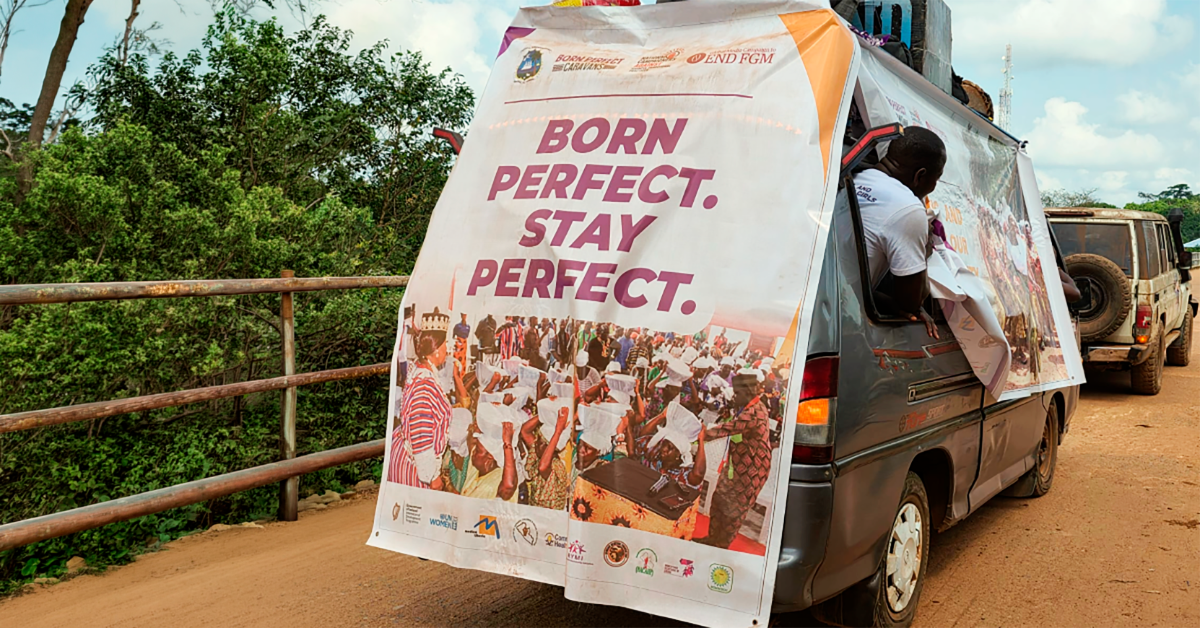
Impact studies are showing that the combination of the Born Perfect Caravans and local media campaigns are changing minds about FGM. When local activists reach remote high-prevalence communities with the truth about FGM and the celebration of girls being born perfect, conversation is sparked, the silence is broken, and people begin to question why they are harming their children.
The Pattern: Rapid Attitude Change
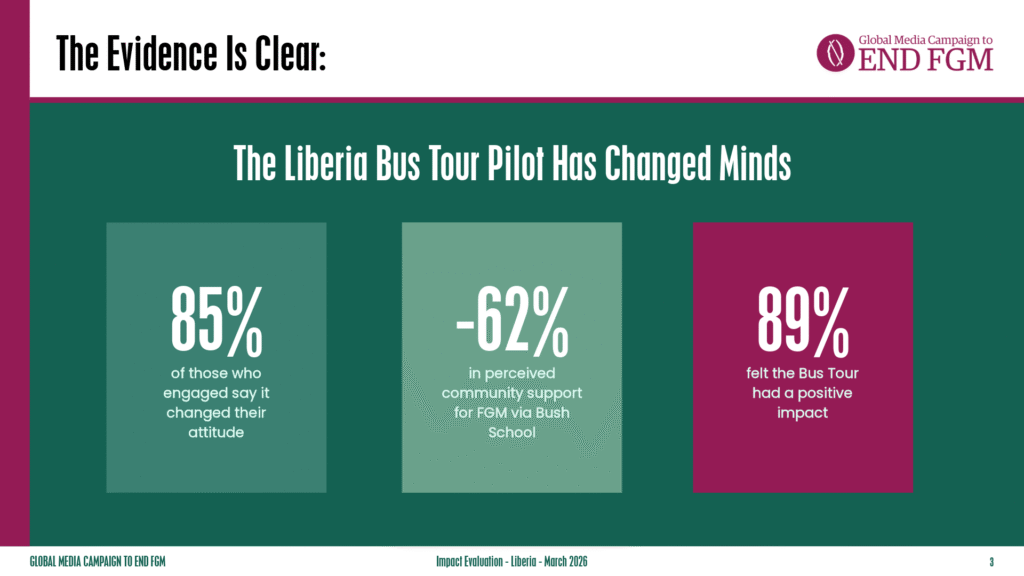
Patterns show that when people engage directly, attitudes shift and behaviours change. The two most recent studies show that people change their minds after interacting with the Born Perfect Caravans: 94% in Guinea Bissau (2024), and 85% in Liberia (2026). The studies also show that intentions to cut their daughters falls by 73% in Liberia (2022), while 9 in 10 people in Guinea Bissau say they will not cut their daughters after the Caravans, and 72% in Mali after local media campaigns. At the same time, more dialogue and conversation is happening in the family and at the community level across the studies.

While media is a dominant influencer in Mali and Nigeria, where 78% said media influenced their views (2021), in studies which included the Caravan intervention as a catalyst for media campaigns, media is a highly effective yet supporting channel to in-person mobilisation led by cultural influencers and professionals. Direct engagement is the tipping point, and Caravans accelerate change dramatically – particularly evident in the Guinea Bissau study which compared attitude change in Sonaco, which was visited by a Caravan, versus Mafanco, which was not, but many heard about it: 90% in Sonaco said FGM is not necessary, compared to 77% in Mafanco.
What Works to End FGM
Across multiple countries, a clear pattern is emerging. We now understand not just that attitudes can change, but how change happens and what sustains it.
- Health messaging is breaking through: Across all contexts, a key driver for change is exposure to messaging about the harm FGM causes to girls’ health, reframing FGM from a cultural practice into a health risk.
- The law is not reaching communities: Legal frameworks are not reaching the people most vulnerable in remote communities – criminalisation has limited influence if it is not recognised or enacted. Caravans and media campaigns with legal messaging in local dialects are critical to bridging this gap.
- Who delivers the message matters: Trusted local voices, frontline women, and cultural/ religious influencers are central to shifting attitudes
- One-off campaigns are not enough: short-term interventions can spark change, but sustained impact requires consistent engagement and media coverage.
The overarching learning is that no one size fits all. The success of the Born Perfect Campaign lies in its adaptability – with locally led campaigns shaped by the realities of the communities they come from and serve, responding to what people actually need on the ground. However, one thing is clear: when parents are told that FGM is putting their daughters’ health and lives at risk, they listen – and begin to question a harmful practice that has been accepted for generations.
Why This Matters and Next Steps
Over a decade of backing frontline-led research and campaigning, and we now know what works. Next, Somalia is joining Guinea Bissau, Kenya, Liberia, and Sierra Leone, in launching its first Born Perfect Caravans, alongside GMC’s largest ever impact study, with funding from the German Ministry of Foreign Affairs.
In the current climate of international aid cuts, it’s time to scale the cost-effective and evidence-based approaches to ending FGM by chanelling funding directly to frontline leaders with the trust and experience to do it. The question is no longer whether and how we can end FGM – but whether we will fund the solutions that are already working.
DONATE MONTHLY to back frontline women and keep the wheels running.